
I want you to imagine a scenario that is incredibly common, yet rarely talked about out loud. It is 10:30 PM on a Tuesday. You and your partner are laying in the exact same bed, scrolling through your respective phones. You are physically inches apart, but an invisible ocean seems to separate you.
You desperately want them to reach over, pull you close, and just hold you. You want to feel chosen, desired, and physically connected. But you don’t say anything, because the last time you initiated, they were “too tired,” and the rejection stung way too much to risk it again. So, you turn off the lamp and go to sleep, feeling profoundly lonely right next to the person you love.
If you are reading this on PairPulse today, I want to wrap you in a massive hug and tell you that you are not alone. Welcome to the “Roommate Syndrome.”
Navigating a lack of physical intimacy is one of the most complex, delicate, and agonizing aspects of a long-term relationship. We often assume that if two people love each other, the physical connection should just happen effortlessly forever. But reality is beautifully complicated. Stress levels fluctuate, bodies change, and the spark can fade. Today, we are going to have an honest, compassionate conversation about how to bridge the gap between mismatched desires and rebuild physical intimacy from the ground up.
The Trap of Mismatched Libidos
Let’s address the elephant in the room: What happens when one partner wants physical intimacy every single day, and the other partner only wants it once a month?
In relationship psychology, this is known as a desire discrepancy. It is entirely normal. It is statistically impossible for two human beings to maintain the exact same level of physical desire for decades. However, the way couples handle this gap often makes or breaks the relationship.
- The High-Desire Partner: Often feels chronically rejected, unloved, and unattractive. They begin to internalize the “no,” believing that their partner’s lack of physical desire is a direct reflection of their self-worth.
- The Low-Desire Partner: Often feels chronically pressured, broken, and inadequate. They feel like a constant disappointment, which creates immense performance anxiety, further shutting down their desire for any kind of touch.
To break this toxic cycle, we have to stop viewing physical desire as a fixed personality trait and start viewing it as a response to your shared environment. Often, a drop in physical intimacy is just a symptom of an underlying issue. Perhaps one partner is carrying too much of the household mental load, or perhaps you are both still struggling to rebuild trust after a lie that fundamentally damaged the emotional safety of your bond.
Why Non-Sexual Touch is the Ultimate Foundation
The moment we hear the words “physical intimacy,” our brains immediately jump to the bedroom. This is the first, and most damaging, misconception couples face.
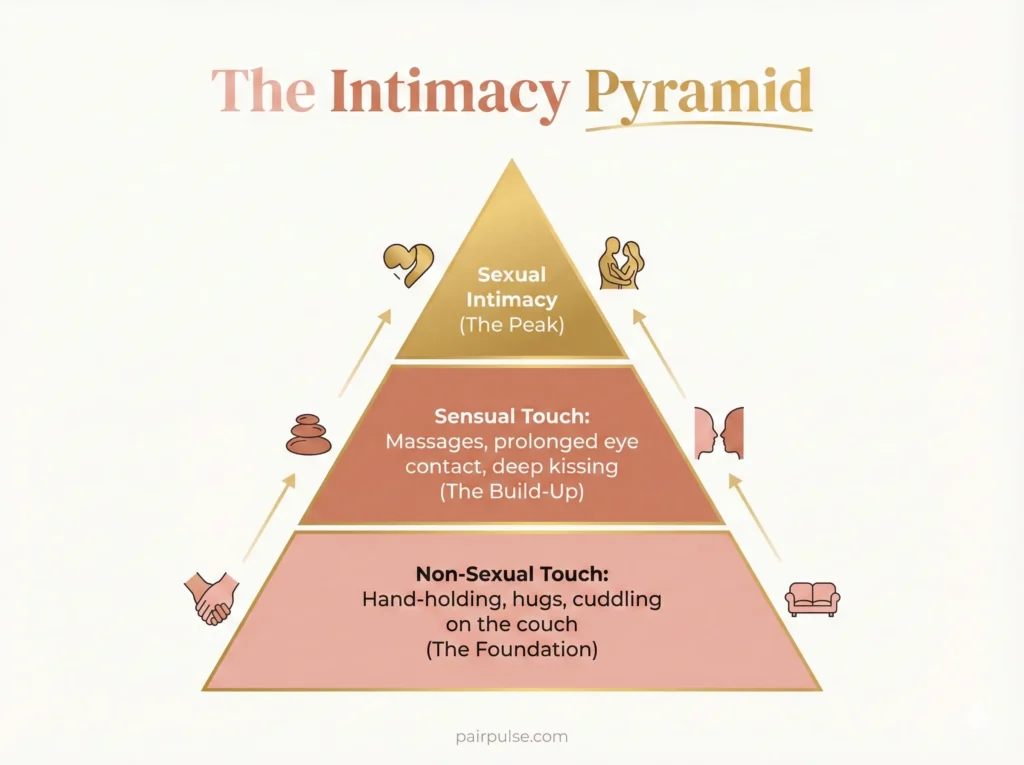
While sexual intimacy is a vital part of a romantic relationship, it is only the tip of the iceberg. True physical intimacy is about establishing profound bodily safety with another human being. According to leading sex therapists at the American Association of Sexuality Educators, Counselors and Therapists (AASECT), non-sexual physical touch is the absolute foundational layer of a healthy sexual relationship.
Consider these powerful forms of non-sexual touch:
- Affectionate Touch: Holding hands while driving, or kissing their forehead before work.
- Comforting Touch: A long, tight hug when they are crying.
- Playful Touch: Tickling, or a gentle nudge while laughing at an inside joke.
If a relationship lacks these foundational touches, jumping straight to sexual intimacy often feels transactional or highly pressured. When you take the intentional time to improve emotional intimacy, you realize that emotional safety and physical affection are completely intertwined.
Bridging the Gap: Spontaneous vs. Responsive Desire
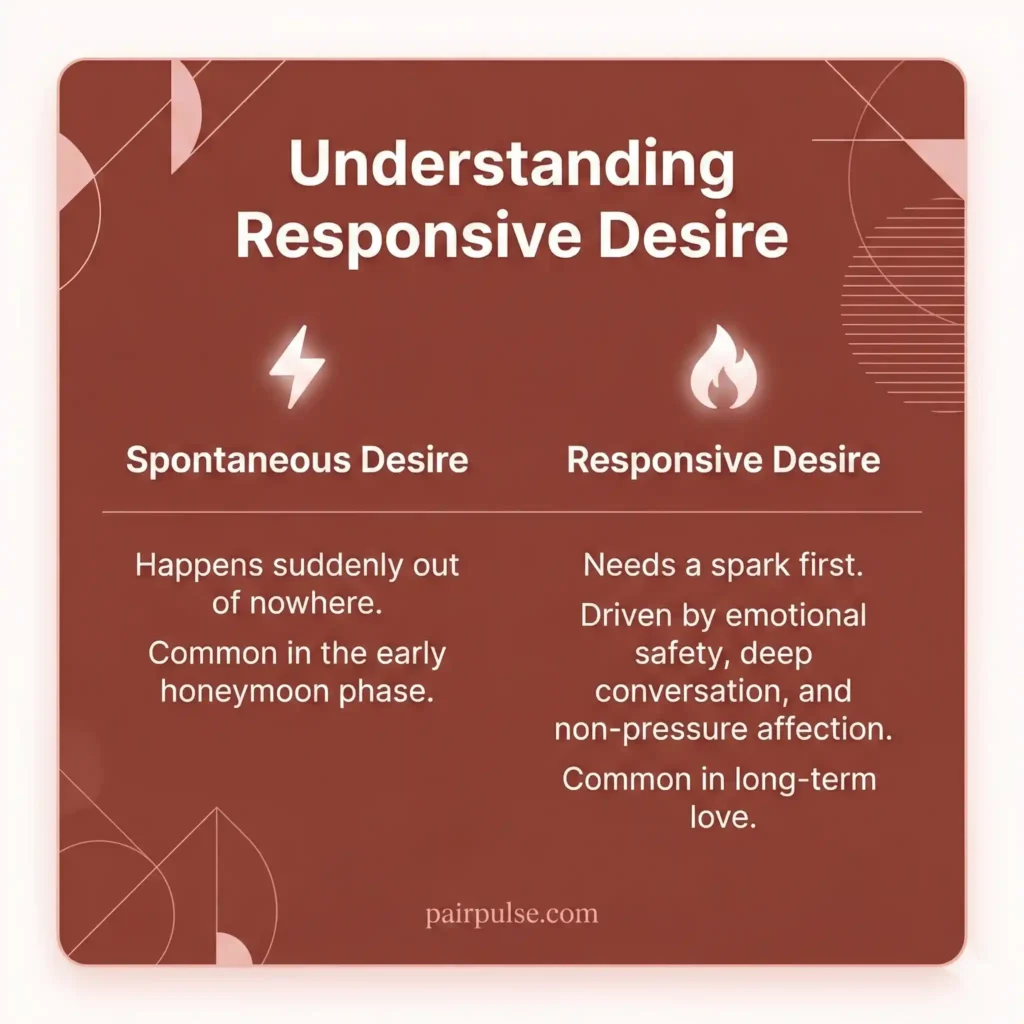
It is vital to recognize how physical intimacy shifts as a relationship matures. When we are younger or just starting to date, physical intimacy is heavily driven by the “honeymoon phase” hormones—dopamine and oxytocin. It feels spontaneous, explosive, and urgent.
If you look deeply into decoding casual dating insights from a guy’s perspective, you’ll notice that casual intimacy is often highly physical but lacks deep emotional vulnerability. It burns bright and burns out fast.
In a long-term, committed relationship, the nature of intimacy naturally changes. According to the Gottman Institute, long-term couples transition from “spontaneous desire” (wanting it out of nowhere) to “responsive desire” (wanting it only after the right context and emotional connection have been established).
You have to learn to woo your partner all over again. You have to build the emotional runway before you expect the physical plane to take off.
How to Ask for More Touch (Without Starting a Fight)
If you want to fulfill your physical intimacy needs, you have to be brave enough to talk about them. Dropping subtle hints, sighing loudly, or giving the silent treatment will not work. Your partner cannot read your mind.
Here is a step-by-step guide to having a healthy conversation about your physical connection:
- Time It Right: Do not initiate this conversation in the bedroom, right after a rejection, or when you are both exhausted. Bring it up in a neutral, relaxed environment—like during a walk or while drinking coffee.
- Use the “I Feel” Framework: Avoid accusatory “You” statements. If you say, “You never touch me anymore,” your partner will instantly throw up their defensive shields. Instead, say: “I have been feeling a little disconnected from you lately. I realize that for me to feel truly close, I need more physical touch, like holding hands. How have you been feeling about our connection?”
- Be Specific About Preferences: We all have different physical love languages. Your partner might think a back rub is a sign of love, but you might prefer them to just play with your hair. You have to tell them!
Assessing Your Connection: Is It Just a Phase?
Sometimes, when you have been stuck in the Roommate Syndrome for years, it is hard to tell if you are just going through a dry spell, or if the core foundation of the relationship has actually crumbled.
If you are feeling completely lost, it can be incredibly helpful to take a step back and evaluate your dynamic objectively. Sometimes, taking a couple compatibility score calculator together can be a gentle, eye-opening way to see if your core values, emotional needs, and long-term goals still align. It removes the heavy emotional weight and gives you both a baseline to start a productive conversation about where the disconnect is actually happening.
3 Daily Habits to Cultivate Physical Intimacy
If you want to bridge the gap and fulfill both of your needs, you have to incorporate micro-moments of touch into your daily routine.
- The 6-Second Kiss: A six-second kiss is long enough to feel romantic rather than routine. It forces you to stop, connect, and acknowledge each other as lovers before you rush off to work.
- The 20-Second Hug: Scientific studies show that a 20-second hug releases a massive surge of oxytocin (the bonding hormone) in the brain, instantly lowering blood pressure and reducing stress.
- “No-Pressure” Cuddle Time: Schedule time to be physically close with the explicit, spoken agreement that it will absolutely not lead to sex. When the lower-desire partner knows that cuddling is just cuddling, the performance anxiety completely evaporates.
Frequently Asked Questions (FAQs)
1. Is a lack of physical intimacy a valid reason to end a relationship?
Yes. Physical touch is a fundamental human need. If you have communicated your needs clearly, sought therapy, and your partner consistently refuses to acknowledge your pain or work on the physical connection, you are allowed to decide that this relationship no longer meets your core requirements.
2. How do I initiate physical touch if I have an intense fear of rejection?
Start incredibly small. Do not initiate with a grand, high-stakes gesture. Start by simply resting your hand on their arm while watching a movie, or giving them a quick shoulder squeeze when you walk past them in the kitchen. Gauge their response to these micro-touches before moving forward.
3. Can physical intimacy be restored after years of “roommate syndrome”?
Absolutely, but it requires massive patience. You cannot jump from being roommates to passionate lovers overnight. You must slowly rebuild the emotional foundation first, and gradually reintroduce safe, affectionate, non-sexual touch until your nervous systems feel secure with each other again.
Final Thoughts: The Courage to Reconnect
Fulfilling physical intimacy needs is rarely about finding the perfect bedroom technique; it is about finding the perfect level of emotional safety. It requires the profound courage to look at the person you love, strip away your ego, and say, “This is what I need to feel loved by you.”
If you are feeling disconnected right now, please do not lose hope. The human body is incredibly resilient, and love is remarkably forgiving. Take a deep breath, reach out your hand, and start rebuilding your bridge today.
How do you and your partner navigate differences in physical intimacy? What is a small, daily touch that always makes you feel deeply loved? Share your thoughts with the PairPulse community in the comments below!
2 thoughts on “When You Feel Like Roommates: How to Rebuild Physical Intimacy Without Pressure”