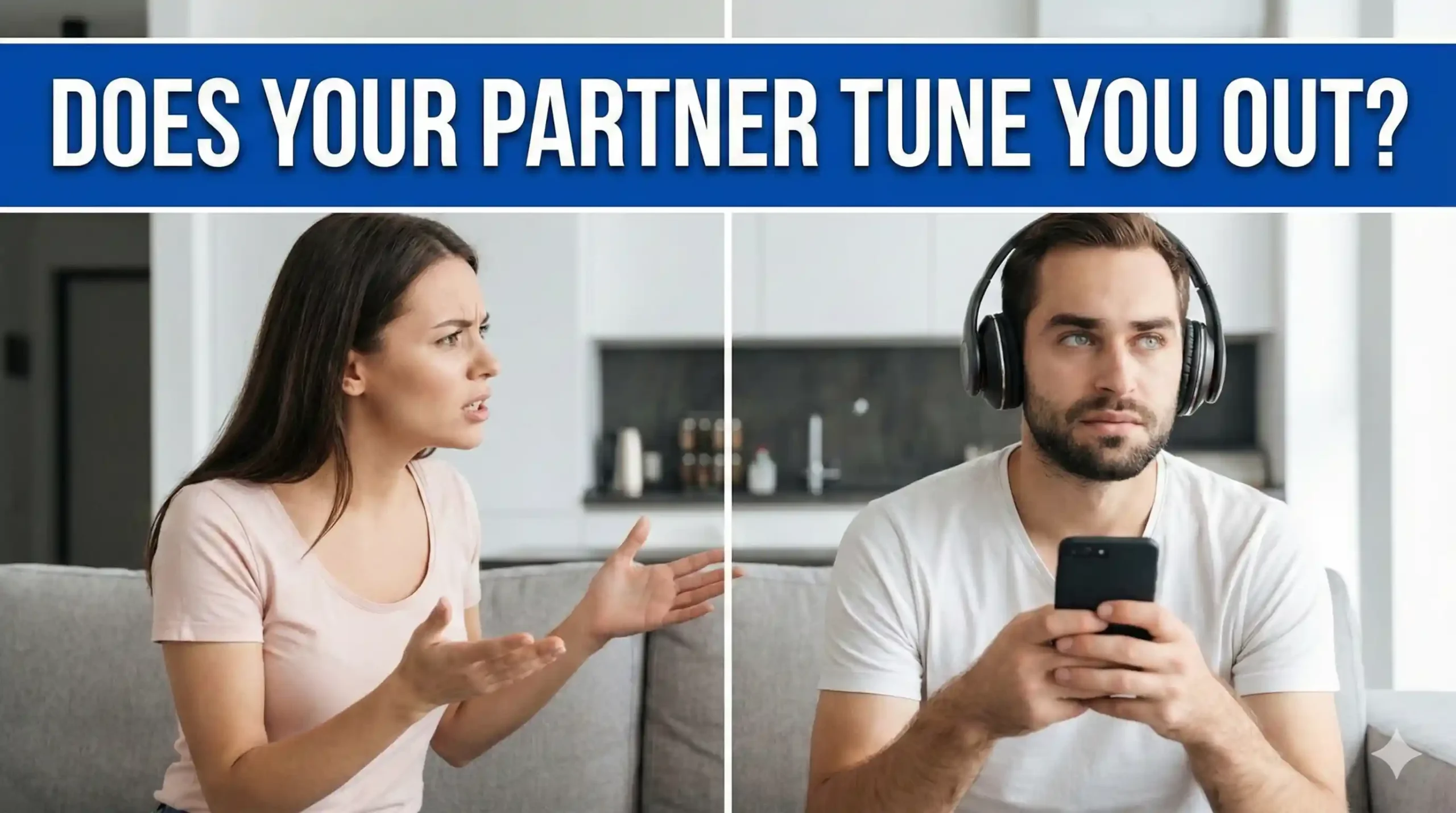
We have all been there.
You are sitting in the car, the radio is off, and the silence is deafening. You just had a fight, but you aren’t even sure what it was about. Was it the dishes? Was it the tone of voice? Or was it something much older that has been festering for years?
You said, “I feel overwhelmed.”
They heard, “You are not doing enough.”
George Bernard Shaw famously said, “The single biggest problem in communication is the illusion that it has taken place.”
Most couples think they are communicating because they are talking. But talking is just noise. Communication is connection. If you are broadcasting on FM and your partner is receiving on AM, it doesn’t matter how loud you speak—they will never hear you.
In my work analyzing relationship dynamics at PairPulse, I have found that 80% of “compatibility issues” are actually just “translation issues.”
In this comprehensive guide, we are going to move beyond the generic advice of “use I statements.” We are going to explore the neuroscience of listening, decode the hidden subtext of your arguments, and give you the advanced scripts you need to finally feel heard.

1. The Biology of “Not Listening”: Why They Shut Down
Before we blame our partners for ignoring us, we need to understand their biology. Have you ever noticed that in the middle of a heated argument, your partner’s eyes might glaze over, or they might stare blankly at the wall?
You think: “They don’t care about me.”
Science says: “They are Flooded.”
“Flooding” is a biological response to emotional threat. When your heart rate exceeds 100 beats per minute during a conflict, your body enters Fight, Flight, or Freeze mode.
- The Amygdala (Lizard Brain): Takes over to ensure survival.
- The Prefrontal Cortex (Rational Brain): Shuts down completely.
This means your partner physically cannot process complex information, empathy, or logic in that moment. They aren’t ignoring you; they are drowning.
The 20-Minute Rule
Research suggests it takes the body approximately 20 minutes to metabolize adrenaline and cortisol.
- The Mistake: Pushing them to “resolve this right now.”
- The Fix: If you see them shutting down, say: “I see we are both escalating. Let’s take a 20-minute break. I promise I will come back to this conversation.”
Crucial Note: You must come back. Taking a break without a return time triggers abandonment anxiety. Returning creates trust.
2. The 4 Styles of “Fake Listening”
Real listening is rare. According to the Mayo Clinic, assertive communication requires active listening, but most of us fall into one of these four “Fake Listening” traps:
1. The Rehearser
While you are speaking, I am not listening. I am mentally writing my rebuttal. I am looking for the gap in your sentence so I can jump in and prove I am right.
- Result: I miss the emotion behind your words because I am focused on the logic of my defense.
2. The Fixer
You say, “I’m so stressed about my boss.”
I immediately say, “Well, have you tried emailing HR? Or maybe you should quit.”
- Result: You feel invalidated. You didn’t want a solution; you wanted a witness to your pain.
3. The Dreamer
You are talking about your day, but a keyword you used triggered a memory, and now I am thinking about what we should have for dinner or that movie we watched last week.
- Result: I nod at the right times, but my eyes are empty.
4. The Judge
I am listening only to gather evidence. I am scanning your words for contradictions or exaggerations (“You said you ‘never’ get time off, but you went out last Tuesday!”).
- Result: The conversation becomes a courtroom trial, not a connection.
3. The Speaker-Listener Technique: A Protocol for Safe Conflict
If you find yourselves constantly interrupting each other, you need a structure. This technique feels awkward at first (like learning a new dance), but it is the most effective way to stop an argument in its tracks.
The Rules:
- The Speaker holds the floor. They speak in short sentences.
- The Listener cannot rebut, argue, or fix. They can only paraphrase.
The Script:
- Speaker: “I feel really lonely when you come home and go straight to your video games. It makes me feel like I’m the last priority on your list.”
- Listener: “What I’m hearing is that when I play games immediately after work, you feel lonely and prioritized last. Is that right?”
- Speaker: “Yes.” (Or “No, it’s more about…”)
Only when the Speaker says “Yes” can the roles switch.
Why this works:
You cannot be the “Judge” or the “Rehearser” if you have to repeat back what they said. It forces your brain to actually process their words.
4. Decoding “Meta-Communication”: What Are We Really Fighting About?
Most fights are not about the topic on the surface.
- The fight about dishes is usually about respect.
- The fight about spending money is usually about safety.
- The fight about sex is usually about desirability.
This is called Meta-Communication.
Scenario: The Trash Can War
- Him: “Why didn’t you take out the trash? I asked you three times.”
- Her: “I was busy! Why are you nagging me?”
The Surface Fight: Trash and nagging.
The Meta-Fight:
- His Reality: “When she forgets the trash, I feel like my requests don’t matter to her. I feel unheard.”
- Her Reality: “When he reminds me three times, I feel like he doesn’t trust me to be an adult. I feel controlled.”
How to Pivot:
Stop arguing about the trash. Ask the “Meta-Question”:
“What is this actually about for you? Is it about the trash, or do you feel like I’m not respecting your requests?”
Pro Tip: Sometimes, we simply have different “Conflict Blueprints” based on our personalities. One person chases, the other retreats. Understanding your dynamic is key. Check our Couple Compatibility Score to see if your communication styles are naturally aligned or if you need to build a bridge.

5. The “XYZ” Formula: Advanced “I Statements”
We have all been taught to use “I statements” (e.g., “I feel sad”), but vague I-statements can still be confusing. “I feel like you are being a jerk” is not an I-statement; it’s an accusation in disguise.
Upgrade to the XYZ Formula:
“When you do X, in situation Y, I feel Z.”
- X (Specific Action): Not “You are messy,” but “You left your wet towel on the bed.”
- Y (Context): “Right after I changed the sheets this morning.”
- Z (Feeling): “I feel disrespected and frustrated because it creates more work for me.”
Why it works:
- It is specific (harder to deny).
- It focuses on your feeling, not their character flaw.
- It gives them a clear roadmap of what to change.
6. The Art of Validation (Even When You Disagree)
This is the hardest skill to master: Validating their feelings without agreeing with their facts.
You might think, “If I validate his anger, I am admitting I was wrong.”
False.
Validation says: “I understand why you feel that way,” not “You are right.”
The Validation Script:
Let’s say your partner is angry because you were late. You know you were late because of traffic (not your fault).
- Invalidating: “It was traffic! Stop overreacting. I couldn’t help it.”
- Validating: “I can see why you are frustrated. You were sitting here waiting for 20 minutes, and it felt like I didn’t care about your time. That makes sense.”
According to the Greater Good Science Center at UC Berkeley, validation is the quickest way to lower emotional intensity. Once they feel understood, they are open to hearing your explanation about the traffic.
7. Digital Communication: Rules for the Texting Age
In 2026, 50% of our communication happens on screens. This is a minefield for misunderstanding because text lacks Tone, Volume, and Facial Expression.
Rule 1: No Fighting Over Text
If a text exchange takes more than 3 bubbles to resolve, or if you feel your heart rate rising, stop.
Send this: “This is too important to discuss over text. Let’s talk about it tonight when I can see your face.”
Rule 2: Assume Positive Intent
If a text reads as rude (“Where are you?”), assume they were in a rush, not that they are angry.
- The Story You Tell Yourself: “They are checking up on me!”
- The Reality: They want to know when to start dinner.
Rule 3: Use Emojis (Seriously)
It sounds childish, but a thumbs up 👍 or a heart ❤️ can clarify tone instantly. “Okay” can look aggressive. “Okay :)” looks friendly.
8. The “State of the Union” Meeting
Do not wait for a crisis to talk about your relationship. By then, it is too late.
I recommend a weekly “State of the Union” meeting. 30 minutes, once a week (Sunday morning with coffee is great).
The Agenda:
- Appreciations: Name 3 things they did this week that you loved. (This builds the “Positive Sentiment Override”).
- Logistics: Who is picking up the kids? What is the budget for groceries?
- The Ask: “How can I make you feel more loved this coming week?”
When you schedule communication, you remove the anxiety of the “We need to talk” ambush.
9. When It’s Not Just “Communication”: Recognizing Toxicity
Sometimes, “we have communication problems” is a euphemism for emotional abuse.
If your partner uses communication as a weapon, no amount of “active listening” will fix it.
Watch for these signs:
- Gaslighting: “That never happened. You are imagining things. You are crazy.”
- Stonewalling: Punishing you with days of silence to “teach you a lesson.”
- Contempt: Mocking you, mimicking your voice, or calling you names.
If you are constantly walking on eggshells, wondering if your reality is real, you aren’t in a bad patch; you might be in a toxic cycle.
Gut Check: Are you unsure if your relationship difficulties are normal or toxic? Do you feel drained and confused after every interaction? Take our Should I Break Up? Quiz. It is designed to help you objectively evaluate whether the relationship is healthy enough to save.
10. Frequently Asked Questions (FAQs)
I receive emails every day from couples struggling to connect. Here are the answers to the most common questions about communication.
Is it okay to go to bed angry?
Surprisingly, yes. The old advice “never go to bed angry” is biologically flawed. When you are tired, your prefrontal cortex is exhausted, making you more irritable and less rational. Sleeping resets your neurochemistry. Often, you will wake up realizing the fight wasn’t as big as it felt last night.
My partner refuses to talk about feelings. How do I get them to open up?
Vulnerability begets vulnerability. Instead of asking “Why won’t you talk?”, share a fear of your own first. Also, note that many people (especially men) communicate better “side-by-side” (while driving, walking, or cooking) rather than “face-to-face,” which can feel like an interrogation.
We argue about the same things over and over. Is our relationship doomed?
Not necessarily. Dr. John Gottman found that 69% of relationship problems are “perpetual”—meaning they never go away because they are based on personality differences (e.g., one is messy, one is neat). The goal isn’t to solve these problems, but to communicate about them with humor and acceptance rather than criticism.
What is the worst way to apologize?
“I’m sorry you feel that way.” This is a non-apology. It shifts the blame to the other person’s feelings rather than your actions. A real apology has three parts: 1) Admit what you did, 2) Validate their hurt, and 3) Say what you will do differently next time.

Conclusion: The Courage to Be Wrong
Improving communication requires one thing above all else: Humility.
It requires the humility to say, “I didn’t hear you. Let me try again.”
It requires the courage to say, “I was defensive just now because I felt attacked.”
You don’t need to be a perfect orator to be a great partner. You just need to be willing to keep the channel open. Put down the phone. Look them in the eye. And listen—not to reply, but to understand.
Your partner is waiting to be found.
2 thoughts on “Why Your Partner Doesn’t Hear You: The Complete Psychological Guide to Radical Communication (2026)”