I remember sitting on the edge of my bed, staring blankly at a phone screen, feeling like all the oxygen had just been sucked out of the room. My hands were shaking, and my mind was racing at a million miles an hour. The person I loved most in the world—the person I trusted with my deepest vulnerabilities—had just lied to me.
If you have clicked on this article, I know exactly what you are feeling right now. It is that sudden, sickening drop in your stomach. It is the deafening silence in the room when the truth finally comes out. It feels as if the solid ground you’ve been standing on for months, or even years, has suddenly vanished beneath your feet.
Whether it was a “small” white lie about finances, a hidden text message thread with an ex, or a catastrophic betrayal like infidelity, a lie fundamentally shifts the reality of your relationship. You’re probably sitting there right now, exhausted, crying, and wondering: Can we ever get back to how things used to be?
I want to be completely honest with you. No, you can’t go back to how things used to be. That version of your relationship, built on a fragile or false foundation, is gone. But please, hear me out: if both of you are willing to do the excruciatingly heavy, uncomfortable lifting, you can build something entirely new. Something far stronger, radically transparent, and deeply authentic.
Rebuilding trust after a lie is perhaps the hardest emotional marathon a couple can run. But I’ve seen couples navigate this horrific storm and come out the other side with a connection deeper than they ever thought possible. Let’s walk through the exact, practical steps to heal your broken heart and restore your bond.
The Psychology of Betrayal: Why the Lie Hurts More Than the Action
Before we jump into fixing things, I need to validate your pain. Society often tells us to “just get over it” or “forgive and forget.” But the human brain does not work that way.
Often, the action itself isn’t what breaks your heart—it’s the elaborate cover-up. It’s the painful realization that the person who was supposed to be the guardian of your heart was actively, consciously deceiving it. You are experiencing what psychologists call cognitive dissonance. Your brain is struggling to reconcile the image of the loving partner you know with the person who looked you in the eye and lied.
Trust is the invisible, delicate bridge between two people. When a lie is told, that bridge doesn’t just crack; it completely collapses. You aren’t just mourning the truth of the situation; you are mourning the sudden loss of psychological safety.
According to renowned relationship researchers at The Gottman Institute, trust is built in tiny, seemingly insignificant moments of connection and reliability. This means it also shatters when those moments are polluted with deceit. It is completely normal to feel angry, confused, paranoid, and numb all at the same time right now. Take a deep breath. You are not going crazy. Your feelings are entirely valid.
5 Steps to Rebuild Trust After a Lie
Healing takes time, but more importantly, it takes a clear, actionable roadmap. Hope alone won’t fix a broken relationship; intentional action will. Here is how you can start putting the shattered pieces back together, step by step.
Step 1: Hit Pause Before You Make a Final Decision
When the truth first bombs your life, your brain literally goes into an acute stress response—commonly known as fight-or-flight mode. Your heart rate spikes, your adrenaline surges, and your body treats the emotional betrayal exactly like a physical threat.
You might have the overwhelming urge to pack your bags, scream at the top of your lungs, post about it on social media, or immediately demand a divorce.
- My Personal Advice to You: Step back. Give yourself a mandatory 48-hour breathing period. You do not have to figure out the rest of your life today. Separate yourself physically if you need to. Go stay with a friend, book a hotel room, or simply sleep in the guest bedroom. Process the initial shock, cry until you have no tears left, and let your nervous system calm down before you sit down for the “big talk.” Decisions made in the peak of trauma are rarely the ones we want to live with forever.
Step 2: Demand (and Deliver) Radical Honesty
You cannot rebuild a beautiful house on a rotten, crumbling foundation. If your partner is the one who lied, they need to lay absolutely every single card on the table. Right now.
- Avoid the “Trickle Truth” Trap: The absolute most damaging thing a partner can do is confess to 10% of the lie today, another 20% on Wednesday, and the rest next month when they get caught again. This is called “trickle-truthing,” and it restarts your trauma clock every single time a new detail emerges.
- The Transparency Agreement: Sit down together and make an ironclad agreement. Tell them: “This is the moment for complete, radical honesty. No more minimizing, no more protecting my feelings, and no more protecting yourself. I need the whole truth, or we cannot move forward.” It will hurt to hear, but the truth is the only scalpel sharp enough to cut out the infection.
Step 3: The “Show, Don’t Tell” Phase of Healing
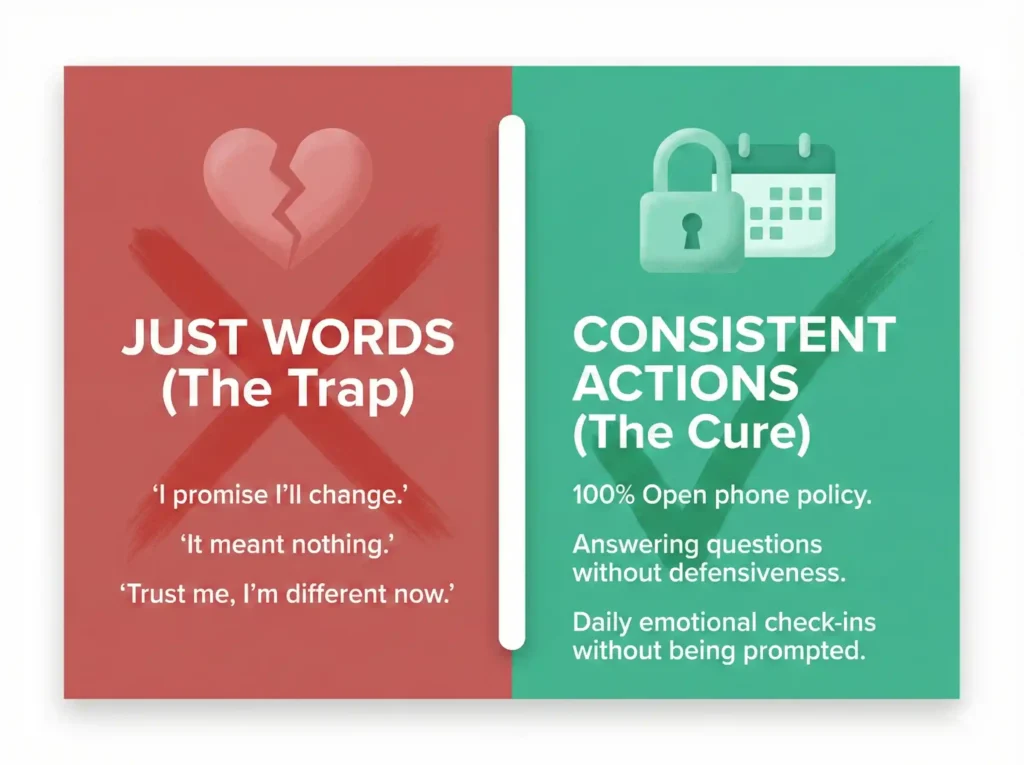
An apology is just a sentence. “I’m so sorry, I’ll never do it again” means absolutely nothing when trust is broken. Words do not rebuild trust; consistent, boring, repetitive actions do.
If I could give you one piece of relationship advice to hold onto tightly during this agonizing time, it’s this: watch their feet, not their lips. * For the partner who lied: You must become an open book. You have temporarily lost the privilege of privacy. This might mean freely sharing your phone passcode, voluntarily turning on your GPS location sharing, explaining where you are going and who you are with without being asked, or proactively stepping up your emotional care. You have to actively prove your reliability every single day, without acting annoyed that you have to do so.
Step 4: Navigate the “Trigger” Days Together
I wish I could tell you that once you decide to forgive, the pain stops. But healing isn’t linear. There will be days, maybe weeks from now, when you feel completely fine, laughing together over dinner. And then suddenly, a movie scene about cheating plays, a specific song comes on the radio, or they take 10 minutes too long to reply to a text—and boom. You are triggered. Your anxiety spikes, bringing all the pain rushing back as if the lie was just discovered five minutes ago.
- How to handle it as a team: When this happens, do not bottle it up. Look at your partner and say, “I am feeling heavily triggered right now because you didn’t answer your phone, and I need reassurance.”
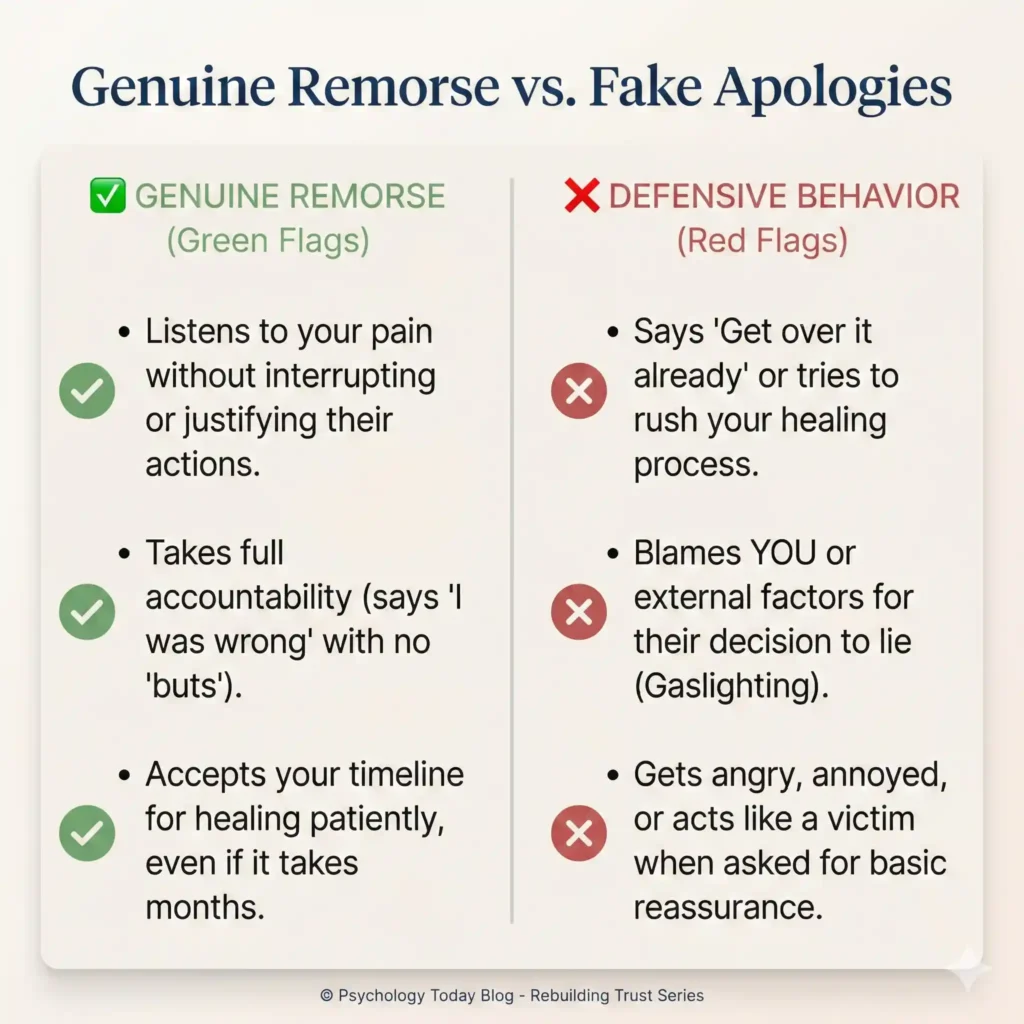
- The Test of Remorse: A genuinely remorseful partner will not roll their eyes. They won’t get defensive or say, “Are we seriously still talking about this?” Instead, they will stop what they are doing, hold space for your anxiety, pull you close, comfort you, and validate your fears until your nervous system is regulated again.
Step 5: Forgiveness is a Daily Choice, Not a Magic Button
I used to think forgiveness meant forgetting what happened and moving on instantly, pretending everything was perfectly fine. I was wrong.
Forgiveness is not a magic eraser. It is a conscious, deeply intentional choice you have to wake up and make every single morning. Some days it will be surprisingly easy to love them; other days, you will look at them and feel a wave of resentment, and forgiveness will feel completely impossible.
Remember this: forgiving your partner doesn’t mean what they did was okay, justified, or acceptable. It means you are actively choosing to drop the heavy, toxic anchor of resentment so that you can heal, and so that you both can finally sail forward into a new chapter.
When Is It Time to Walk Away?
I want to be very, very clear about this final point, because I care about your mental health above all else. Not every relationship should be saved after a lie. Trust takes two people to build, but only one person to completely destroy.
You cannot do the work for both of you. If your partner continues to gaslight you (making you doubt your own sanity and reality), if they minimize your feelings, if they continuously shift the blame onto you for their decision to lie, or if they refuse to change their secretive, guarded behavior—it is time to pack your bags.
You cannot heal in the same environment that is actively making you sick. Sometimes, the bravest thing you can do for your own heart is to protect your peace and walk away. You deserve psychological safety in your own relationship. Do not settle for anything less.
Frequently Asked Questions (FAQs) About Broken Trust
How long does it actually take to rebuild trust after a major lie?
I wish I could give you an exact timeline, but the truth is, it depends entirely on the severity of the lie and the consistency of the betrayer’s actions. Relationship experts often state that healing from a major betrayal (like infidelity or financial ruin) takes anywhere from 18 months to 3 years. It is a marathon, not a sprint. Healing happens in layers.
Can a relationship really be stronger after someone lies?
Surprisingly, yes. But this only happens if the crisis forces both partners to address deep, underlying issues that were previously ignored. If the lie leads to radical honesty, improved communication, and a total teardown of toxic habits, the “new” relationship built from the ashes can be more authentic and resilient than the original one.
How do I stop overthinking and checking their phone constantly?
Hyper-vigilance is a trauma response. You are checking their phone because your brain is desperately trying to keep you safe from another surprise attack. You stop overthinking not by forcing yourself to stop looking, but because your partner’s consistent, transparent behavior over a long period of time finally convinces your brain that you are safe again. Therapy and journaling are also crucial tools to manage this anxiety.
Final Thoughts on Healing Your Heart
Rebuilding trust after a lie is grueling. It takes immense mutual empathy, many tear-filled, exhausting conversations, and the willingness to face uncomfortable truths. But if you both are deeply committed to the process, and if the remorse is genuine, the new foundation you build can become unbreakable. Give yourself grace today. You are doing the best you can.
Have you ever navigated a major betrayal in a relationship? What was the absolute hardest part of the healing process for you, and what helped you get through the darkest days? Please, let me know in the comments below—this is a safe space, and your story might be exactly what someone else needs to read today.
8 thoughts on “How to Rebuild Trust After a Lie: A Step-by-Step Guide to Healing”