Discovering that your partner has been unfaithful is one of the most devastating psychological blows a human being can experience. The moment you find out, your entire reality shatters. The memories you thought were happy suddenly feel like lies. The future you planned vanishes in an instant.
Psychologists often compare the discovery of an affair to PTSD (Post-Traumatic Stress Disorder). You might experience a racing heart, an inability to sleep, intrusive thoughts, and overwhelming waves of anger and grief. This is known as Betrayal Trauma.
If you are reading this on PairPulse today, you are likely in the thick of this emotional storm, asking yourself the ultimate question: Can I ever forgive them? And even if I do, can this relationship actually survive?
The short answer is yes. A relationship can survive infidelity, and sometimes, it can even emerge stronger than before. However, surviving an affair requires a grueling, agonizing amount of emotional labor, primarily from the person who cheated. Today, we are going to break down the exact psychological steps required to heal from betrayal, rebuild your foundation, and navigate the excruciating process of learning how to forgive a cheater.
Phase 1: Surviving the Initial Shock
In the days and weeks immediately following the discovery, your only goal is emotional survival. You do not need to make any massive life decisions right now.
Do Not Make Immediate Promises
Do not immediately pack your bags and file for divorce, but also, do not immediately promise them that you will stay. Your brain is entirely flooded with adrenaline and cortisol. You are not in a state to make a permanent decision about your future. Tell your partner: “I need time to process this. I cannot promise you what the outcome will be.”
Stop “Pain-Shopping”
“Pain-shopping” is the overwhelming urge to dig through their phone, read every single text message between them and the affair partner, and ask agonizingly specific details about the physical intimacy. While you absolutely deserve to know the truth about what happened, obsessing over graphic, intimate details will only brand traumatic images into your brain that you will never be able to un-see. It severely hinders the healing process.
Before making any moves, familiarizing yourself with how to deal with infidelity on a fundamental level can help you stabilize your nervous system during this initial shock phase.
Phase 2: The Burden of Accountability (The Cheater’s Role)
Here is a hard truth: You cannot heal a relationship by yourself. If you are the betrayed partner, it is not your job to fix this.
For the relationship to survive, the unfaithful partner must take on 100% of the heavy lifting. According to extensive research on affair recovery by The Gottman Institute, a renowned relationship research organization, the unfaithful partner must display a specific set of behaviors for true healing to begin.
1. Radical Transparency
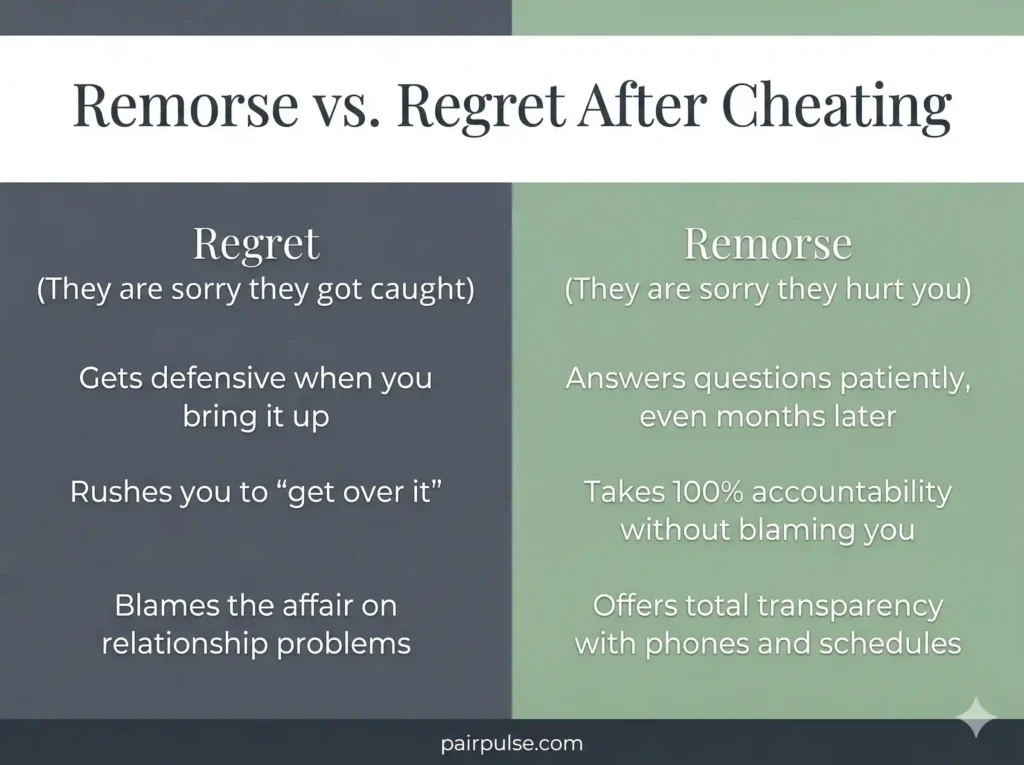
The cheater must immediately cut all contact with the affair partner. Furthermore, they must surrender their right to privacy for the foreseeable future. Passwords must be shared, locations must be turned on, and defensive behavior must vanish. They have to prove, daily, that they are a safe harbor. If they get angry or defensive when you ask who they are texting, they are not ready to reconcile.
2. Answering the “Why”
“It just happened” or “I was drunk” are not acceptable answers. The unfaithful partner must do intense internal work (often through individual therapy) to understand exactly why they gave themselves permission to step outside the relationship boundaries. Was it a need for validation? A fear of intimacy? Until the root cause is identified, the threat of it happening again remains.
Learning the exact steps for rebuilding trust after a lie is a non-negotiable prerequisite for the unfaithful partner before any forgiveness can even be considered.
Phase 3: Navigating the Conflict
If you decide to stay and try to rebuild, you are going to fight. You will experience triggers months, or even years, after the event. A movie scene about cheating or a specific song might instantly transport you back to the day you found out.
During these triggered moments, your anger will flare up. This is where mastering relationship conflict resolution becomes the lifeline of your relationship.
- For the Betrayed: You have the right to express your pain, but you must avoid using the affair as a permanent weapon to win every unrelated argument. If you agree to the reconciliation process, you are agreeing to eventually lay the weapon down.
- For the Unfaithful: You must hold space for their anger. When your partner is triggered, you cannot say, “Are we really talking about this again?” You must say, “I know you are hurting because of what I did. I am here, I am listening, and I am so sorry.”
Phase 4: What Forgiveness Actually Means
There is a massive societal misconception that forgiving someone means saying, “What you did is okay, and I have forgotten about it.” According to psychological frameworks from the American Psychological Association (APA), forgiveness is a deeply internal process. Forgiveness does not mean forgetting. It does not mean excusing the behavior.
Forgiveness means choosing to release the desire for revenge. It means untying your own emotional well-being from the painful event. You forgive your partner not to absolve them of their guilt, but to free yourself from the heavy, suffocating chain of carrying resentment every single day.
You can forgive someone and still choose to leave them. Or, you can forgive someone and choose to build a brand new relationship with them—because the old relationship is dead. The affair killed it. If you stay, you are building “Marriage 2.0.”
Knowing When to Walk Away
Not every relationship can, or should, be saved after infidelity.
If your partner continues to lie, trickle-truths you (gives you the truth in tiny, agonizing pieces only when caught), refuses to go to therapy, or makes you feel crazy for having trust issues, the environment is toxic.
Sometimes, the betrayal fractures the foundation so deeply that your nervous system will simply never feel safe next to them again. If you have been trying to heal for over a year and you still feel physical anxiety every time they look at their phone, it might be time to accept that the damage is permanent. Taking an objective Should I Break Up Quiz can help you clearly evaluate if you are staying out of genuine hope for the future, or simply out of the fear of starting over.
Frequently Asked Questions (FAQs)
1. Once a cheater, always a cheater. Is this true?
No. Human beings are capable of profound change, but only if they experience a severe “rock bottom” moment and do intense psychological work to address their character flaws. If they face no consequences and do no therapy, they will likely cheat again. If they do the grueling work, they can become fiercely loyal partners.
2. Should we stay together for the kids?
Staying in a miserable, high-conflict, trustless marriage is often far more damaging to children than an amicable divorce. Children absorb the emotional energy of the household. They need at least one healthy, stable, and happy parent, even if that parent is single.
3. How long does it take to heal from infidelity?
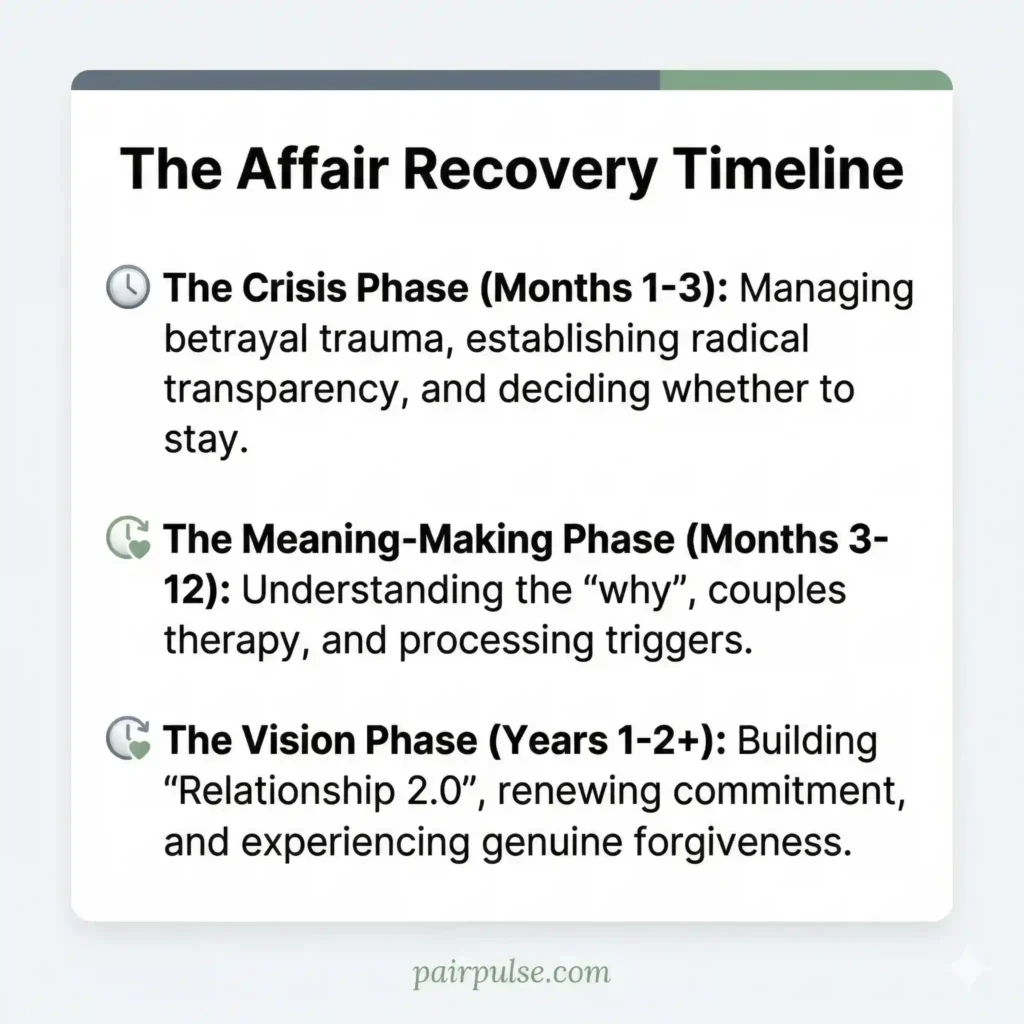
Relationship experts generally agree that the affair recovery timeline takes anywhere from 18 months to 3 years. It is a marathon, not a sprint. There will be good weeks where you feel deeply connected, followed by terrible weeks where a trigger sets you back. Patience is absolutely essential.
Final Thoughts: The Courage to Heal
Surviving infidelity is an initiation into a club that absolutely no one wants to join.
Whether you choose to pack your bags and rebuild your life solo, or you choose to stay and do the grueling work of rebuilding the foundation with your partner, both paths require immense, undeniable courage.
If you choose to stay, remember that forgiveness is not a one-time event; it is a choice you have to make every single morning when you wake up. Demand transparency, prioritize your own mental health, and never settle for a partner who isn’t willing to move mountains to earn your heart back.
Have you ever had to navigate the painful process of rebuilding trust? What was the hardest part of the journey for you? Share your advice and stories with the PairPulse community in the comments below!
1 thought on “How to Forgive a Cheater: A Psychological Guide to Rebuilding Trust”