The moment you find out is a moment you will never forget. It usually happens in an instant—a notification on their phone, a strange credit card charge, or a confession that completely pulls the rug out from under your entire life.
Your heart drops into your stomach. The room spins. Suddenly, the person you trusted most in the world, the person who was supposed to be your safe harbor, becomes the source of your deepest pain.
If you are reading this on PairPulse today, I am so incredibly sorry that you are going through this. Discovering that your partner has been unfaithful is a profound trauma. It shatters your reality, destroys your self-esteem, and leaves you questioning every single memory you ever shared with them.
You are likely drowning in a million questions right now: “Why did they do it? Was it my fault? Can we fix this? Should I just pack my bags and leave right now?”
Today, we are going to slow down. I am going to walk you through a deeply compassionate, psychological guide on how to deal with infidelity. Whether you ultimately choose to leave or decide to do the agonizing work of rebuilding your relationship, you need a roadmap to survive the immediate aftermath. Let’s navigate this incredibly dark storm together.
Phase 1: The Immediate Aftermath (Damage Control)
When the bomb of infidelity drops, your nervous system goes into extreme “fight, flight, or freeze” mode. You are experiencing acute betrayal trauma. During the first few days and weeks, your only job is emotional triage.
1. Do Not Make Any Massive Life Decisions
In the heat of the pain, you might want to immediately file for divorce, sell the house, or post about their betrayal on social media for the world to see. Stop. Psychologists universally recommend waiting at least three to six months before making any permanent decisions about the relationship. Right now, your brain is flooded with cortisol (the stress hormone) and intense grief. You cannot make a rational, long-term decision while in a state of acute shock. Give yourself the gift of time.
2. Feel the Rage, but Protect Your Dignity
You are going to feel a level of anger and devastation that you didn’t know was biologically possible. You are allowed to cry, scream into a pillow, and be entirely furious. However, do not let their terrible choices turn you into a toxic person. Do not resort to physical violence, do not destroy their property, and do not use your children as pawns to punish them. Protect your peace and your legal standing.
3. Build a “Vault” of Support
You cannot survive this alone, but you also shouldn’t tell everyone you know. If you tell your entire family, they will likely hate your partner forever—which makes things incredibly complicated if you eventually decide to stay. Choose one or two fiercely loyal, non-judgmental friends to act as your “vault.” You need a safe space to vent where your secrets will be protected.
Phase 2: Deciding to Stay or Leave
Eventually, the initial shock will subside, and you will be faced with the monumental task of deciding what comes next. Infidelity does not have to be an automatic death sentence for a relationship, but it absolutely requires the death of the old relationship. If you stay, you are essentially building a brand-new marriage or partnership from the ashes.
How do you know if it is worth saving?
The Signs You Should Walk Away
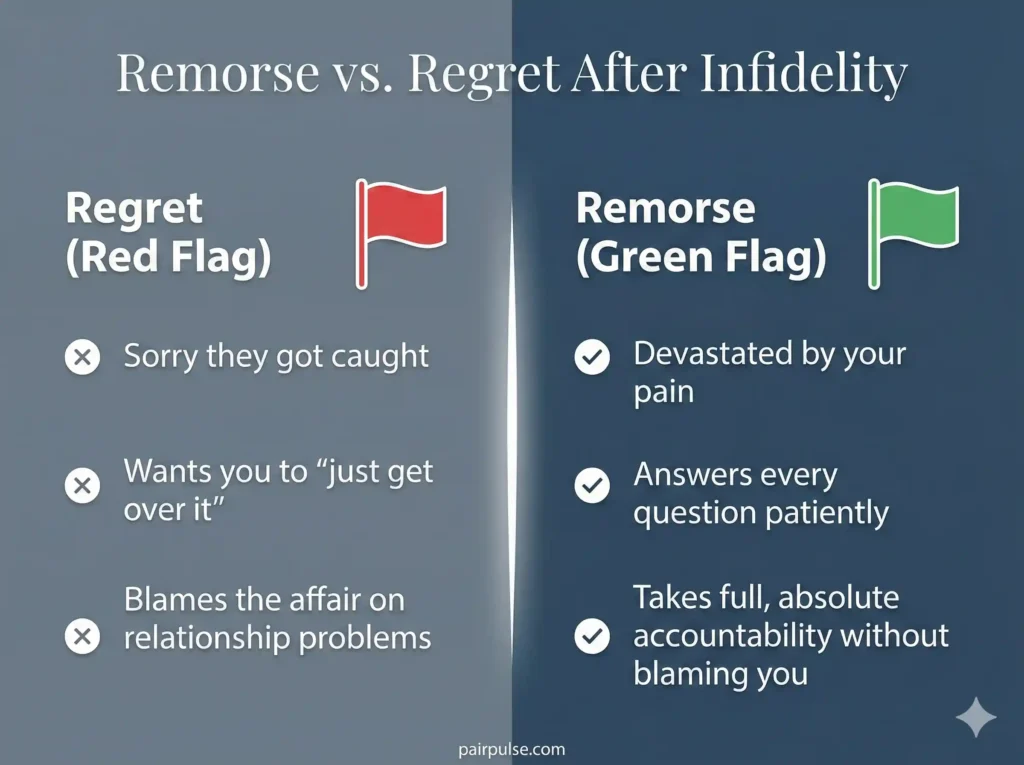
- They Are Defensive, Not Remorseful: If your partner blames you for their cheating (e.g., “If you paid more attention to me, I wouldn’t have done it”), leave. True healing requires them to take 100% accountability.
- It is a Serial Pattern: If this is the third time they have been caught, you are not dealing with a mistake; you are dealing with a character flaw.
- The Lies Continue: If you are still catching them in “trickle-truths” (only admitting to what you have proof of), the relationship is not a safe place.
If you are utterly paralyzed by indecision, sometimes taking a step back and looking at the relationship objectively is the only way to find clarity. Taking a comprehensive Should I Break Up Quiz can help you evaluate if the foundational compatibility and respect required to rebuild actually still exist.
The Signs It Might Be Fixable
- Absolute Transparency: They willingly hand over their phone passwords, share their location, and answer every single agonizing question you have without getting defensive.
- Deep Remorse: They aren’t just sorry they got caught; they are visibly devastated by the pain they have caused you.
- Willingness to Do the Work: They proactively find a couples therapist, read books on affair recovery, and actively lead the healing process.
Phase 3: The Agonizing Work of Rebuilding Trust
If you both decide to stay, you must understand that the road ahead is grueling. Trust is lost in buckets and rebuilt in drops.
1. The Burden of Proof is on the Cheater
The betrayed partner is going to experience PTSD-like symptoms. You will have triggers—a certain song, a commercial, or a location might suddenly send you into a panic attack. The unfaithful partner must become a “healer.” They must be patient, reassuring, and completely transparent.
Learning how to rebuild trust after a lie requires the unfaithful partner to act with radical consistency. If they say they will be home at 5:00 PM, they must walk through the door at 4:59 PM. There is zero margin for error.
2. Forgiveness is Not Forgetfulness
Forgiveness is the most misunderstood concept in affair recovery. Forgiving your partner does not mean you are saying, “What you did is okay.” It does not mean you will magically forget the pain.
Forgiveness simply means you are choosing to release the desire to punish them every single day. You are choosing to put down the weapon so that both of you can actually start building a new house.
3. Re-establishing Emotional and Physical Safety
Infidelity absolutely destroys intimacy. You will likely feel physically repulsed by them at times, and deeply desperate for their affection at other times. This push-and-pull is entirely normal.
To bridge this massive gap, you have to start small. You have to focus heavily on how to improve emotional intimacy before you can ever expect the physical intimacy to return to normal. This means engaging in deep, vulnerable conversations, holding hands without pressure, and slowly learning to feel physically safe in their presence again.

Frequently Asked Questions (FAQs)
Is it true that “once a cheater, always a cheater”?
No. While serial cheaters absolutely exist and should be avoided, many people make a terrible, destructive choice during a period of immense personal crisis, immaturity, or emotional disconnect. If the person shows genuine remorse, undergoes intensive therapy, and fundamentally changes their behavior, they can become an incredibly safe, loyal partner moving forward.
Was it my fault they cheated?
Absolutely not. This is the most toxic lie a betrayed partner can believe. Your relationship might have had problems—maybe you were arguing constantly, or maybe the physical intimacy was lacking. But cheating is a unilateral, destructive decision made by your partner. They could have chosen to go to therapy, they could have asked for a divorce, but they chose to lie. The problems in the marriage belong to both of you; the choice to cheat belongs 100% to them.
Can a relationship actually be better after infidelity?
Surprisingly, yes. Relationship experts like Esther Perel note that the crisis of infidelity forces couples to finally have the brutally honest conversations they have been avoiding for years. If both partners are willing to do the excruciating psychological work, the “second marriage” between the exact same two people can be vastly more intimate, communicative, and stronger than the first.
Final Thoughts: Be Gentle With Yourself
Surviving infidelity is a marathon, not a sprint. Some days you will feel like you have finally moved past the pain, and the very next day, a random memory will drop you right back to square one.
Please be gentle with yourself. Healing is not a straight line.
Whether your healing journey leads you to a beautiful new chapter with your current partner, or gives you the strength to walk away and find peace on your own, I promise you this: you will survive this. Your heart is resilient. The pain will not last forever, and you are entirely worthy of a love that is honest, safe, and true.
Have you ever navigated the devastating aftermath of infidelity? What was the hardest part of the healing process for you, and what advice would you give to someone currently in the crisis phase? Share your story with the PairPulse community in the comments below.
2 thoughts on “Surviving Infidelity: A Step-by-Step Guide to Healing and Moving Forward”