
It is a universal experience. You have just spent the last two hours having a fantastic conversation over a delicious dinner. The chemistry is great, the wine was perfect, and you are already hoping he asks you out again.
And then, it happens. The waiter walks over and drops the small black leather folder in the middle of the table.
Suddenly, the air gets a little thick. Do you reach for your purse? Do you look away and wait for him to grab it? If you offer to pay half, will it insult his ego? If you don’t offer, will he think you are entitled?
If you are reading this on PairPulse today, you are likely navigating the incredibly confusing waters of modern dating finances. In today’s dating landscape, the concept of “Going Dutch”—splitting the bill evenly between both people—is more common, and more heavily debated, than ever before.
Today, we are going to dive deep into the meaning and origins of a Dutch date. But more importantly, we are going to break down the psychology of modern dating etiquette. Should you always split the bill? What does it actually signal to the other person? Let’s decode the financial rules of modern romance.
The Origin: What Does “Going Dutch” Actually Mean?
Before we talk about modern etiquette, it is fascinating to understand where this phrase actually came from.
The term “Going Dutch” originated in the 17th century during the Anglo-Dutch wars. At the time, the English and the Dutch were fierce rivals, constantly fighting over trade routes and naval supremacy. Because of this bitter rivalry, the English began creating phrases that intentionally painted the Dutch in a negative light.
The English coined phrases like “Dutch courage” (liquid courage from drinking alcohol) and, eventually, “Dutch treat” or “Going Dutch.” The implication was that a Dutch person was too cheap to pay for their guest’s meal, forcing everyone to pay for their own share.
While the phrase was born out of 17th-century political propaganda, it has completely lost its negative connotation today. In the 21st century, Going Dutch simply means sharing the cost of an outing, and for many modern couples, it is a symbol of absolute equality.
The Modern Debate: Should Women Offer to Pay?
The traditional rule of dating was incredibly straightforward: The man always pays. However, as women have gained massive financial independence, the rules have fundamentally shifted.
Many independent women feel that splitting the bill on a first date removes the pressure of expectations. When you pay for your half, you completely eliminate that awkward, unspoken feeling of “Do I owe him something because he bought me a $50 steak?” In fact, one of the most empowering pieces of dating advice for women is to always arrive at a date fully prepared and financially able to pay for your own meal. It puts you in a position of power. You are there because you genuinely want to get to know the person, not because you are looking for a free dinner.
The Psychology: What “Going Dutch” Signals to a Guy
When the check arrives and you reach for your wallet, what is actually going through his mind?
If you spend time decoding casual dating insights from a guy’s perspective, you will find that men’s reactions to a woman offering to pay usually fall into two categories:
1. The “Green Flag” Reaction
High-value, emotionally secure men view a woman’s offer to split the bill as a massive green flag. They see it as a sign of partnership, maturity, and genuine interest. Even if they politely decline your offer and insist on paying for the first date, the simple fact that you offered shows them that you are considerate and not entitled to their money.
2. The “Platonic” Reaction
There is a caveat. For some men, if a woman aggressively insists on Going Dutch, they might interpret it as a sign of rejection. In male psychology, paying for a date is often seen as a traditional act of courtship. If you absolutely refuse to let him treat you, he might think you are intentionally trying to friend-zone him and remove any romantic dynamic from the evening.
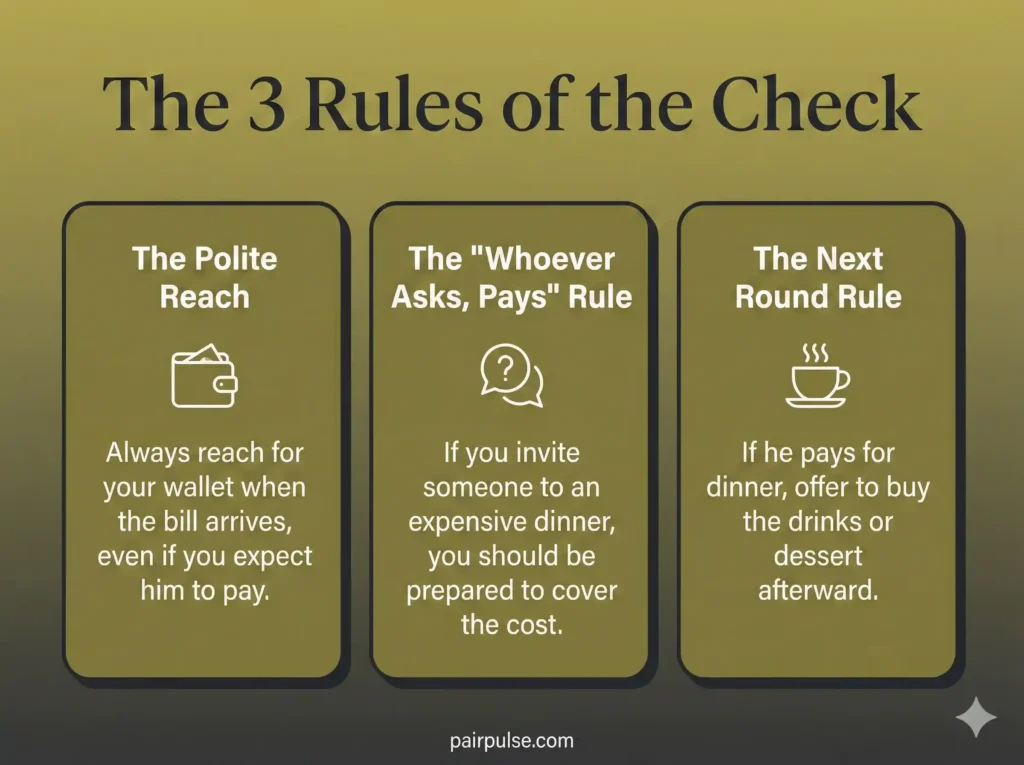
The Golden Rules of Splitting the Bill Today
To avoid the awkward tension at the end of the night, here are the modern, universally accepted rules for handling the finances on a date.
Rule 1: The “Inviter” Pays
This is the most bulletproof rule in modern dating. Whoever initiated the date and chose the venue should expect to foot the bill. If you ask a guy out to a fancy sushi restaurant, you should be fully prepared to pay. If you met on one of the best online dating apps for serious relationships and he asked you out for drinks, the standard etiquette is that he will cover the tab.
Rule 2: The “Split by Default” on Casual Dates
If the date is incredibly casual—like meeting up for a quick coffee, grabbing a smoothie, or going for a walk in the park—Going Dutch is completely normal and often expected. Because the financial stakes are so low (a $5 coffee), paying for yourselves removes any pressure from the interaction.
Rule 3: The “I’ve Got the Next One” Strategy
If you want to maintain a sense of equality without the awkward math of splitting a single check down the middle, use the alternating method. If he pays for the movie tickets, you enthusiastically say, “Thank you so much! I’ve got the popcorn and drinks.” If he buys dinner, you buy the ice cream on the way home. It shows partnership without feeling like a strict business transaction.
Moving From First Dates to Long-Term Finances
The way a couple handles a $60 dinner bill on a first date is often a massive indicator of how they will handle a mortgage five years down the line.
Financial stress is one of the leading causes of breakups and divorces. As your relationship progresses from casual dates into a serious commitment, the conversation shifts from “Going Dutch” to creating a shared financial vision.
Do you both believe in combining bank accounts, or do you prefer keeping your money entirely separate? Do you have the same spending habits? If you have been dating for a while and want to see if your views on money and lifestyle actually align, sitting down and taking an objective couple compatibility score test can be an incredibly eye-opening way to discuss your financial future without it turning into an argument.
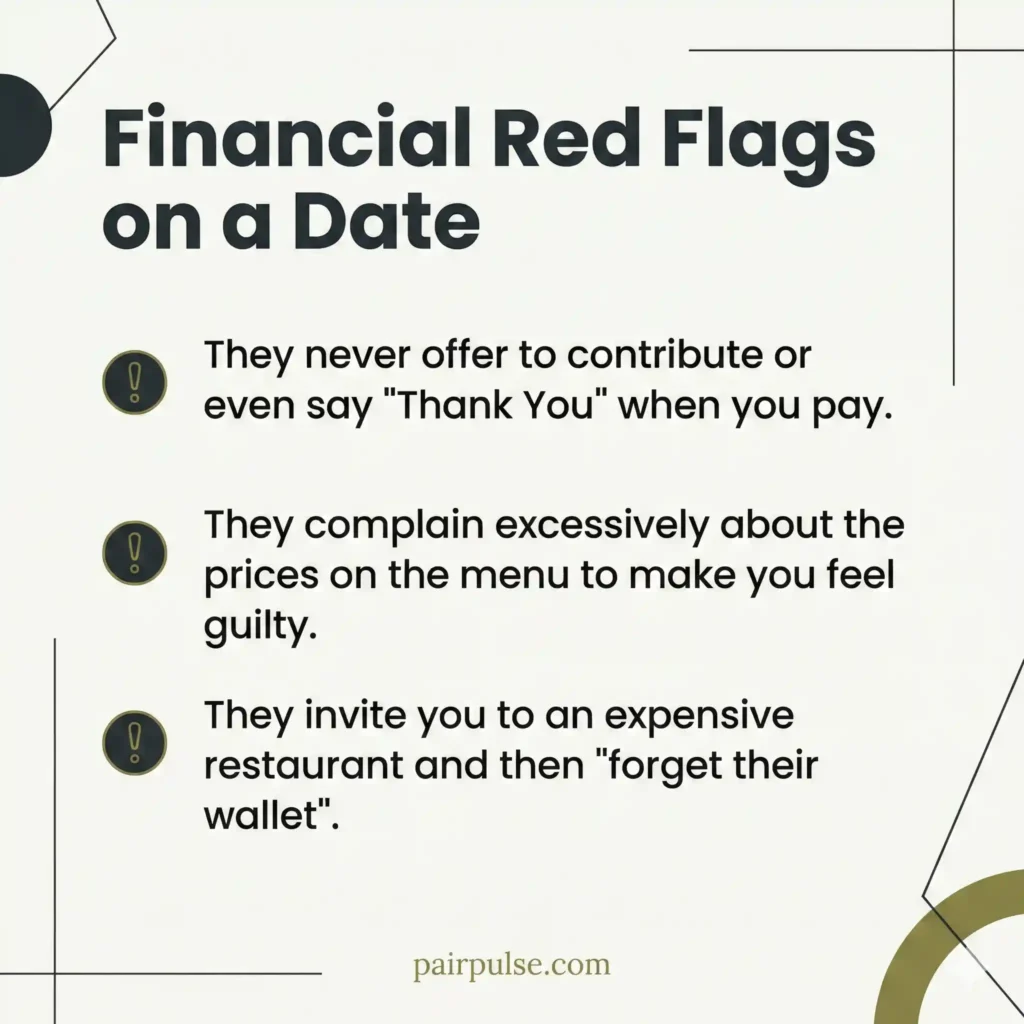
Frequently Asked Questions (FAQs)
Is it rude to ask for separate checks before ordering?
It is not necessarily rude, but it can completely kill the romantic vibe. Asking for separate checks immediately makes the date feel like a lunch meeting with a coworker. It is usually better to put everything on one bill and simply Venmo or Zelle your portion to the person who pays.
What if I genuinely cannot afford the restaurant he chose?
Communication is key. If he suggests a $100-a-plate steakhouse and you are on a strict budget, do not just agree and panic the entire night. Simply say, “I would love to see you, but that place is a bit out of my budget this week. Could we try that new taco place downtown instead?” A good partner will respect your financial boundaries instantly.
Should I offer to pay if I know I never want to see him again?
Yes. If the date was terrible and you know you are going to friend-zone or ghost him tomorrow, paying for your half of the meal is the most graceful exit strategy. It cleanly severs the tie, ensures you owe him absolutely nothing, and allows you to walk away with a completely clear conscience.
Final Thoughts: It’s About the Gesture, Not the Money
At the end of the day, “Going Dutch” is rarely about the actual dollars and cents. It is about the principle of mutual respect.
When you offer to pay, you are communicating that you value the other person’s time and resources just as much as your own. Whether you split the bill exactly 50/50, take turns treating each other, or let him pick up the tab while you leave the tip, the goal is always the same: ensuring that both people feel appreciated.
Stop stressing over the check. Bring your wallet, offer gracefully, and focus your energy on the actual connection sitting across the table from you.
What is your personal rule for splitting the bill on a first date? Have you ever had a horribly awkward moment when the check arrived? Share your experiences with the PairPulse community in the comments below!